

Sunday 25 October 2026: Clocks go back one hour in Europe
Summer time ends at the same moment in most of Europe. The USA and Canada follow a week later.
At a glance
- When Sunday 25 October 2026, 01:00 UTC
- Change Clocks back 1 hour
- Where EU, UK and most of Europe
- Next change Sunday 28 March 2027
- Time zones
Summer time ends in Europe on Sunday 25 October 2026. At 01:00 UTC, the clocks go back one hour, at the same moment in most European countries.[1][2] That night is one hour longer: an extra hour of sleep.
What time do the clocks go back?
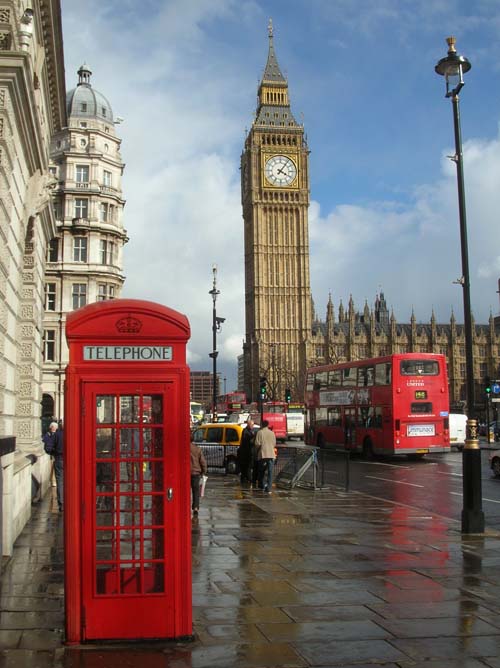
Most countries change at the same moment, so the local time of the change depends on the time zone:[1]
- UK, Ireland and Portugal: 02:00 becomes 01:00.
- Central Europe, for example France, Germany, Spain, Italy, Poland, Sweden and Norway: 03:00 becomes 02:00.
- Eastern Europe, that is Finland, Estonia, Latvia, Lithuania, Romania, Bulgaria, Greece, Cyprus and most of Ukraine: 04:00 becomes 03:00.
Who keeps the same time?
Iceland, Belarus, Russia and Turkey do not change their clocks.[3] Athens and Istanbul, for example, had the same time all summer. From Sunday, Istanbul is one hour ahead.
One week with a smaller time difference to the USA
The USA and Canada turn their clocks back one week later, on Sunday 1 November 2026. For that one week, North America is one hour closer to Europe than usual:
- New York is 4 hours behind London, not 5.
- New York is 5 hours behind Paris and Berlin, not 6.
- Los Angeles is 7 hours behind London, not 8.
So a weekly call set in New York time starts one hour earlier in Europe that week. The Meeting Time Planner shows the hours that suit both sides.
Asia and Australia: one hour further ahead
Most of Asia does not change its clocks, so from Sunday, Dubai, Delhi, Beijing and Tokyo are one hour further ahead of Europe. Sydney and Auckland are on their own summer time, so the gap grows there too: from Sunday, Sydney is 11 hours ahead of London, not 10.
Will Europe stop changing clocks?

Not yet. In 2018 the European Commission proposed ending the changes, after its public survey, with 4.6 million responses, found that 84% wanted that.[2][4] The European Parliament voted for the plan in 2019.[2][5] But the EU countries have not agreed whether to keep summer time or winter time all year, so the plan is still waiting in the Council of the EU.[2][5]
In October 2025, Spain's prime minister Pedro Sánchez said Spain would ask the EU to end the changes.[6] In February 2026, the European Commission started a new study on the effects of the clock changes, to be completed by the end of 2026.[2] Until the EU decides, the clocks keep changing twice a year.[2]
Next change: Sunday 28 March 2027
Summer time starts again on Sunday 28 March 2027, when the clocks go forward one hour at 01:00 UTC.[1]
This year's change is as early as it can be. The last Sunday of October always falls between the 25th and the 31st. It last fell on the 25th in 2020, and the next time will be in 2037.
References
- Directive 2000/84/EC on summer-time arrangements, European Parliament and Council of the EU, 2001.
- Clocks go forward as summer time begins on Sunday 29 March, Finnish Government, 25 March 2026.
- Time zone database: Europe, Internet Assigned Numbers Authority (IANA), accessed 26 October 2026.
- Summertime Consultation: 84% want Europe to stop changing the clock, European Commission, 31 August 2018.
- EU planned to scrap clock changes. Why are they still happening?, Euronews, 22 October 2026.
- Spain to push for end of daylight savings at European level, Catalan News, 20 October 2025.
Clock changes in 2026
Summer time (DST)Standard timeToday
Map: Powered by Esri | Esri, HERE, Garmin, © OpenStreetMap contributors, and the GIS user community
Latest time news
-
 Sunday 1 November 2026: Clocks go back one hour in the USA
Clocks go back one hour in the USA on Sunday 1 November 2026, at 02:00 local time. Who keeps the same time, and what changes with Canada and Mexico.
-
 Sunday 1 November 2026: Clocks go back on Mexico's border
-
 Sunday 1 November 2026: Clocks go back in eastern Canada
-
 Friday 30 October 2026: Clocks go back one hour in Egypt
-
 Egypt introduces daylight saving time starting 7 July 2016
Time now
Plan a call
Open the Meeting Time Planner →